HORSEPLAY ON THE JOB
Horseplay leads to many injuries and property loss damage incidents in the United States every year. A quick search on YouTube or Google will show you hundreds of these types of incidents. While you should enjoy the work that you do, your work should always be completed safely and responsibly.
Read More
MOSQUITOS AND WES NILE VIRUS
Mosquitos are responsible for more human deaths every single year than any other insect or animal. According to Bill Gate’s website gatenotes.com, mosquitos are responsible for over 725,000 deaths a year. That number of deaths is more than the deaths caused by humans, dogs, snakes, roundworms, tapeworms, crocodiles, hippos, elephants, lions, wolves, and sharks combined on an annual basis.
Read More
BACKING UP HAZARDS
Operating heavy equipment or a motor vehicle is inherently a hazardous task, however, backing up creates more risk for incidents to occur. According to the National Safety Council, backing accidents cause 500 deaths and 15,000 injuries per year. All too often, unnecessary backing is responsible for injuries or property damage incidents. It is important to consider the hazards of backing and what can be done to mitigate these hazards.
Read More
HIGH WIND DANGERS
Weather plays a huge role in our ability to work safely when working outdoors. While rain, snow, ice, and hot temperatures are often discussed, less focus is given to the hazards wind can create for workers. It is important to realize the different hazards high winds can pose and what can be done to work safely in these conditions.
Read More
HIERARCHY OF CONTROLS
There are multiple safeguards to control any single hazard. Each level of these safeguards serves to protect employees. Some safeguards or controls are more effective than others. The hierarchy of controls outlines the controls used to mitigate a most effective to least effective hazard.
Read More
HEAT STRESS
Outside of the direct consequences such as heat stroke, heat stress can cause incidents due to loss of focus or excessive fatigue on the job….
Read More
Noise-Induced Hearing Loss (NIHL)
Our hearing is precious to us. Once we diminish or lose our hearing we can never fully recover it. Both on the job and at home there are many sources of noise that can damage our hearing. These sounds can damage sensitive structures in the inner ear and cause noise-induced hearing loss (NIHL). Approximately 26 million Americans have some type of noise-induced hearing loss.
Read More
FIRE EXTINGUISHER USE AND INSPECTION (
Fire extinguishers can be an important tool in preventing a small fire from growing larger. However, they should not be used to combat large or rapidly spreading fires. The most important thing to do during a fire is to get yourself to safety then call the proper authorities to combat the fire….
Read More
Costs of Drugs on the Job
Individuals who come to work under the influence of drugs and alcohol are a big concern for many employers across the world. In the United States, it is estimated over 60% of employers conduct pre-employment drug screen. The cost of these tests are anywhere from $20 to $60 a piece. Since employers are willing to spend this amount of money on screening employees many find that the benefits outweigh the costs.
Read More
HOUSEKEEPING IN THE CONSTRUCTION INDUSTRY
Companies that hold general housekeeping of work areas to a high standard usually have a better safety culture than those companies that do not. Housekeeping is an important part of a robust safety program. Poor housekeeping promotes inefficiency as well as leads to injuries and property loss.
Read More
CLOTHING AND SAFETY
An important but often overlooked aspect of safety is what we decide to wear each day on the job. Safety rules, weather, type of work, hazards of the work, and many other factors weigh in on what type of clothing is optimal for the tasks being completed that day. It is vital to consider the impact clothing can have on safety at work.
Read More
DANGERS OF SILICA DUST
There has been much discussion about silica dust in the past few years. OSHA has issued a regulation to help protect workers from overexposure to this dust. It has been largely unregulated in the past, and because of this, many workers have been faced with overexposure to silica dust. The CDC reports that an estimated 1.7 million U.S. workers are exposed to silica dust on the job.
Read More
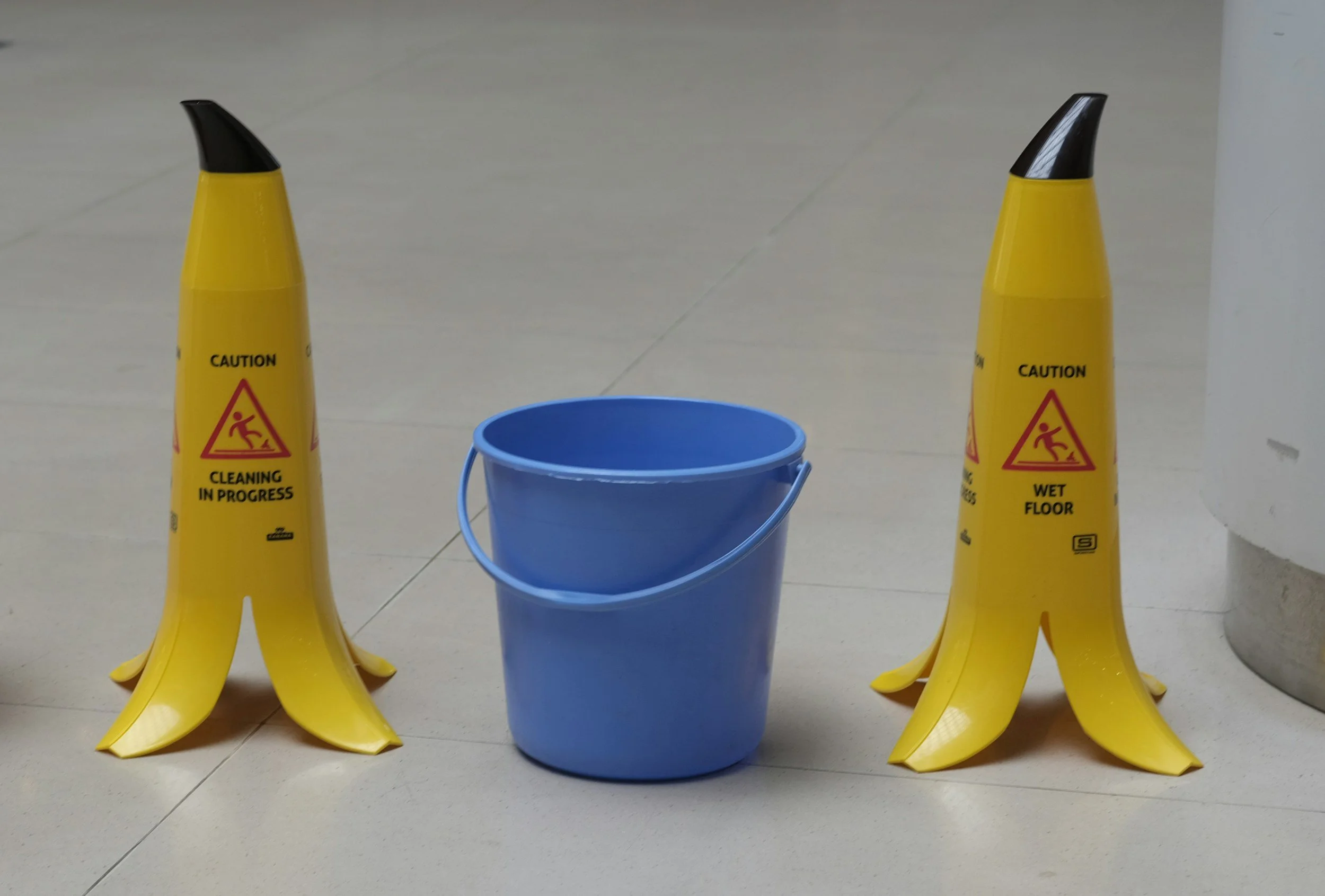
SLIP HAZARDS
Slips, trips, and falls are one of the leading causes of injuries and fatalities in the workplace. According to OSHA, slip, trip, and fall incidents cause 15% of all accidental deaths and are second only to motor vehicle incidents as a cause of fatalities on the job. These types of incidents can result in life-changing injuries to the employees who suffer them. These incidents are also very costly for businesses. HUB reports that the average slip and fall injury costs $20,000.
Read More
ALLERGIES
Allergies are an issue that many people have to pay attention to every day both on and off the job. There are many sources of allergens that can cause an allergic reaction. Common allergens include pollen, dust mites, food, drugs, latex, animal dander, insect stings, and mold. A few of these allergens may be an issue while on the job. It is important to know what you are allergic to as well as communicating it to others in case of an exposure resulting in an emergency situation. In this safety talk, we will discuss two common allergens that could be the source of a severe allergic reaction on the job.
Read More
FALLS ON THE SAME LEVEL
Every single year slip, trip, and fall injuries are some of the most common and costly injuries that occur in the workplace. Many people probably assume that falls from heights cost companies more every year than falls on the same level, but this is not the case.
Read More
LIGHTNING SAFETY TALK
Lightning is a serious hazard both on and off the job. There is an average of 25 million lightning strikes that occur in the United States each year alone. Individuals need to identify and plan for the potential of lightning before beginning a work activity or any leisure activity during storm season.
Read More
EYE INJURIES AND PREVENTION
Our eyes are one of our greatest assets. They give us the ability to see the world around us. If we do not protect our eyes from injuries while at work we could easily lose that ability.
Read More
ZERO INJURIES IN THE WORKPLACE
There are many arguments both for and against having the goal of experiencing no injuries over a year’s time or indefinitely on the job. At the management level and the field level, many employees feel that experiencing zero injuries over a long time is incredibly unrealistic.
Read More
S.O.R.T Tool
There is an endless amount of acronyms when talking about safety. The acronym S.O.R.T. is a tool that can help remind us to take steps to address hazards and create a safe work environment. S.O.R.T stands for Stop, Observe, Recognize, and Take Ownership.
Read More
DROWSY DRIVING
We face many hazards today anytime we operate a motor vehicle, personal or company. Weather, poor road conditions, and wildlife are some common hazards on the road today. Other drivers on the road also create many hazards. One very deadly activity taking place far too often is drowsy driving.
Read More