WORK ZONE TRAFFIC CONTROL PART 5
To you, the flagger:
You have been chosen as a traffic flagger because your supervisor feels you are physically able,
mentally alert, and sufficiently commanding in appearance to be obeyed by the motoring public.
You are an indispensable part of all maintenance and construction operations. We want you to
study the following instructions so that they become second nature. Your life, the lives of your
fellow workers, and the lives of highway users depend upon your alertness and on your ability to
control traffic with your stop-slow sign paddle.
Read More
WORK ZONE TRAFFIC CONTROL PART 4
LMK Pipe Renewal facilities on state highway right of ways are to be maintained in a manner
satisfactory to the State of Florida and at LMK Pipe Renewal expense.
Read More
WORK ZONE TRAFFIC CONTROL PART 3
Frequent and abrupt changes in geometries that require rapid maneuvers (such as lane narrowing,
dropped lanes, or main roadway transitions) should be avoided. Provisions should be made for
the safe operation of work vehicles, particularly on high-speed, high-volume roadways.
Read More
WORK ZONE TRAFFIC CONTROL PART 2
Any member of the crew who serves as a flagger should be equipped with a Stop-Slow paddle and a reflective vest. Crewmembers shall be trained for proper flagging procedures.
Read More
WORK ZONE AND TRAFFIC CONTROL PART 1
All requirements pertaining to the safety, employees in the above listed publications are included in this Safety Manual by reference. In this Safety Manual, it is not practical to prescribe detailed requirements for all situations that may arise; therefore, it is the responsibility of individual employees to determine applicability of the aforementioned publications to their own activities.
Read More
ACCIDENTS OR FIRE HAZARDS
Fire Hazards
If a fire breaks out in a LMK facility and it cannot be immediately and completely extinguished, you should follow the Emergency Reporting Procedures listed below.
Read More
COLLECTION SAFETY SYSTEM PART 3 (PERSONAL SAFETY EQUIPMENT)
The following is a list of the safety equipment that should be worn and/or used by all employees working in sewer manholes at all times, unless stated otherwise.
Read More
COLLECTION SAFETY SYSTEM PART 2 ( GENERAL SAFETY PRECAUTIONS)
The following are the proper procedures and general safety precautions that will be followed
before entering a manhole for the purpose of taking flow measurements, performing inspections
or making sewer repairs:
Read More
COLLECTION SAFETY SYSTEM PART 1 (SAFETY MEASURES)
The construction of sewers should be in accordance with standard design, with special attention
to self-cleaning velocities, good alignment, proper spacing of manholes, and adequate provision
for ventilation. These design standards when followed, will provide for a safer work
environment. However, there are several other points of safety that are of major importance.
Read More
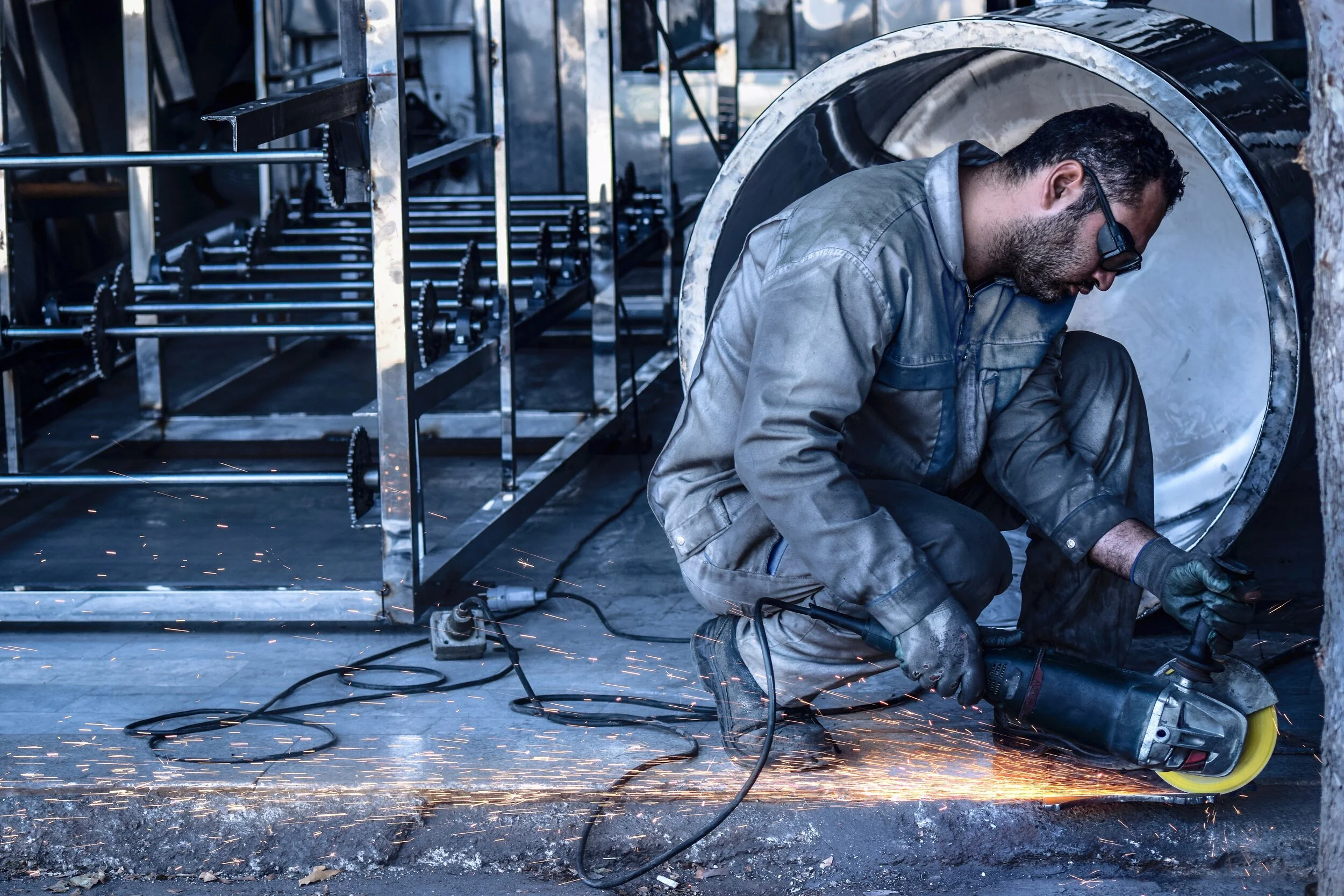
Metal Welding and Cutting
Metal welding and cutting are duties that are performed daily by LMK Pipe Renewal workers.
The following sections are safety procedures, health hazards related to specific metals, and
protective equipment that each employee is to be aware of when welding and cutting metals.
Read More
Self Contained Breathing Apparatus Continued
From The Safety Manual: Smoking in or around a confined space is prohibited.
Artificial lighting shall be certified explosion-proof.
Read More
Lock Out - Tag Out
If you are required to repair or maintain any machinery or equipment, or any electrical power source, start the job by locking out and tagging out all energy sources and starting mechanisms. Locking or tagging out is the only sure way to prevent other employees from accidentally activating the system.
Read More
TAKING OWNERSHIP OF SAFETY
Much of the time spent talking about safety on the job is focused on educating workers to be able to recognize or identify hazards on the job….
Read More
"GOOD ENOUGH" MINDSET
For most of us, we have been doing our jobs long enough to know what the right way is to do something and what falls short to “good enough”. When it comes to workplace safety “good enough” does not cut it….
Read More
DROPPED OBJECTS
Dropped objects are a serious hazard at many worksites. In 2017, there were 237 workplace fatalities due to falling objects (the most recent statistics available) in the United States according to the Bureau of Labor Statistics. Furthermore, OSHA estimates that over 50,000 “struck-by a falling object” incidents occur each year on construction sites alone.
Read More
Ladder Safety
Ladders are an essential tool on many job sites and at home across the United States. Because of their widespread use and the inherent danger of working at heights, they are responsible for a significant number of injuries both on and off the job. Understanding the hazards of using a ladder, following the necessary safe work practices, and avoiding complacency can be a lifesaver.
Read More
HYDRATION: THE IMPORTANCE OF WATER
Water is one of the most important substances on Earth. All plants, animals, and people need water to survive. Water serves important purposes to our bodies and our bodily functions- some of which you may not even be aware of….
Read More